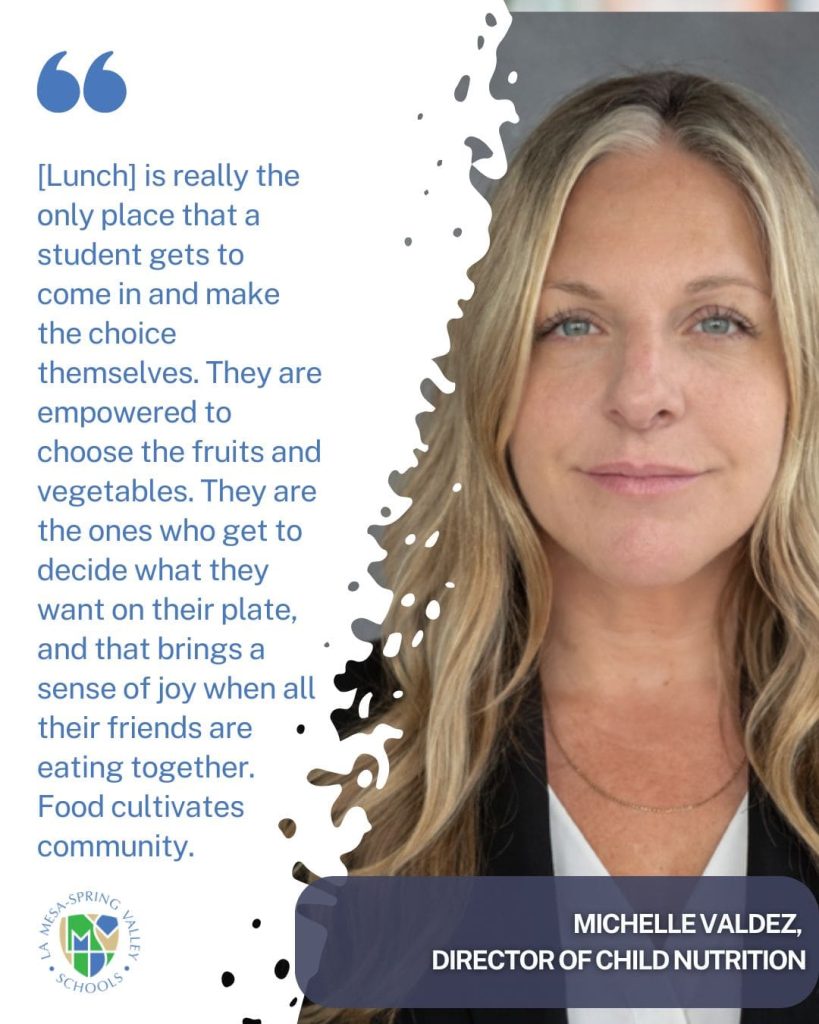
“I like to say [our school cafeterias] are one of the largest restaurants in town. Across 21 school campuses, we serve approximately 10,000 meals a day. This equates to around 100,000 lunches and 50,000 breakfast meals per month. Since August alone, we have served 1.25 million meals.”
That is Michelle Valdez, Director of Child Nutrition for La Mesa-Spring Valley Schools. Valdez is nearing the end of her first year with the district and brings nearly 20 years of experience in school nutrition to LMSV.
After earning her degree in Nutrition and Dietetics at Sacramento State University, Valdez completed her Registered Dietitian qualification in San Diego, where she has lived ever since.
“Ultimately, it’s my background that got me into this field,” she recalls. “I’m an Italian woman, so food and family have always been something I’ve been surrounded by. I learned young that food cultivates community. Then I found this career and it’s been so wonderful ever since I first started.”
Valdez’s introduction to school nutrition began during her collegiate studies, when she worked as a student assistant for the California Department of Education, helping review and audit the National School Lunch Program for compliance.
A New Era For School Meals
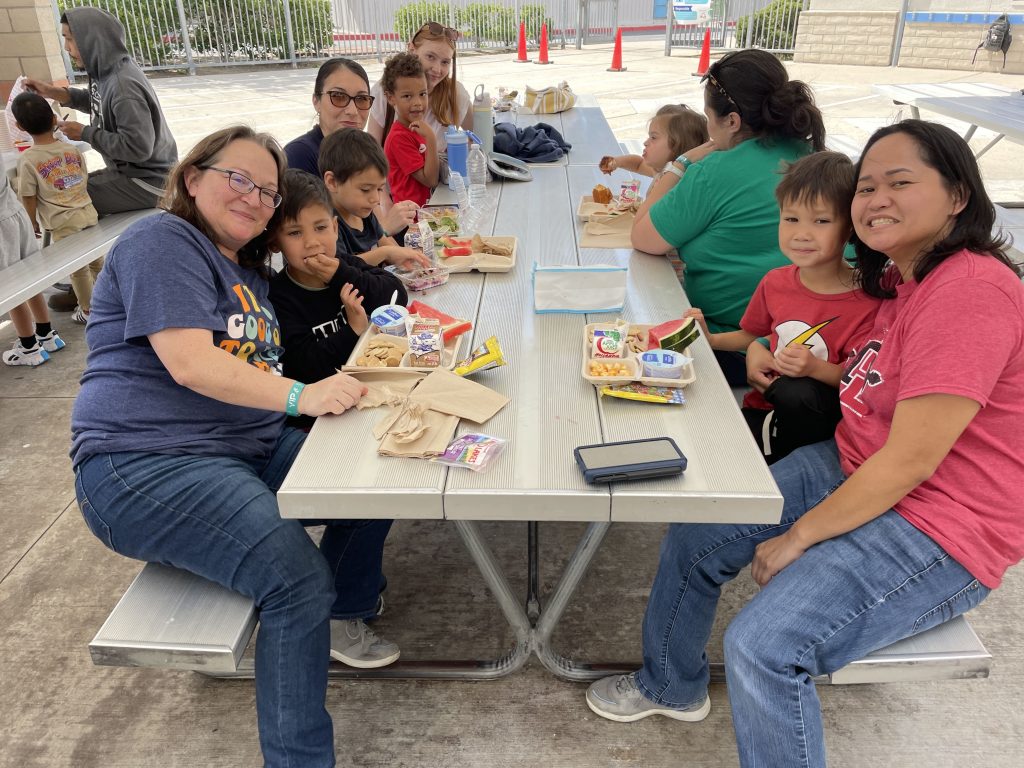
While gossip about school meals is filled with outdated stereotypes, urban myths, and flat-out misinformation, Valdez is quick to tout the quality of school food. Salad bars are filled with fresh, seasonal fruits and vegetables, entree flavor profiles reflect changing taste trends, and strict requirements on the nutritional content of school food ensures that ingredients and portion sizes are designed for students at each stage of growth.
“There is a lot of misconception about school meals – that they’re not healthy or don’t taste good. But as a school Nutrition Director in California, I know how fortunate we are to have received such adequate funding to provide really healthy, flavorful meals that students may have never been able to receive otherwise.
School meals must meet strict guidelines set by the USDA that limit fat, sugar, and sodium, while ensuring students are offered a variety of vegetables, whole grains, and lean proteins. “As a former auditor with the State of California,” Valdez says, “regulations and compliance are very important to me.”
Introducing new foods to young diners takes time, and Valdez implements a three-month rotating menu across the district to help adjust children to new tastes.
Menu variety is also key. Elementary students are offered three entrée choices daily, while middle schoolers have five to six options. Salad bars are stocked with fresh fruits and vegetables daily.
Not All Chicken Nuggets Are Created Equal

While students do gravitate toward familiar favorites like pasta, cheeseburgers, and chicken nuggets, Valdez emphasizes that school versions are far healthier than most grocery and restaurant versions.
“Ours are more heavily regulated because food formulations in the school meal pattern are more restricted. So, a chicken nugget served at school is healthier than one purchased outside of school. Comparing the two, you think they look the same, but they’re not. The school version is a whole-grain bread product with leaner protein inside. It’s pretty awesome.”
Student Voices Are Important
Student feedback plays a central role in menu development as Valdez relies heavily on forecasting, and taste-testing with students helps determine which items make the cut.
Popular items include pasta, orange chicken, and frozen fruit cups, which were a big hit during the recent heatwave.
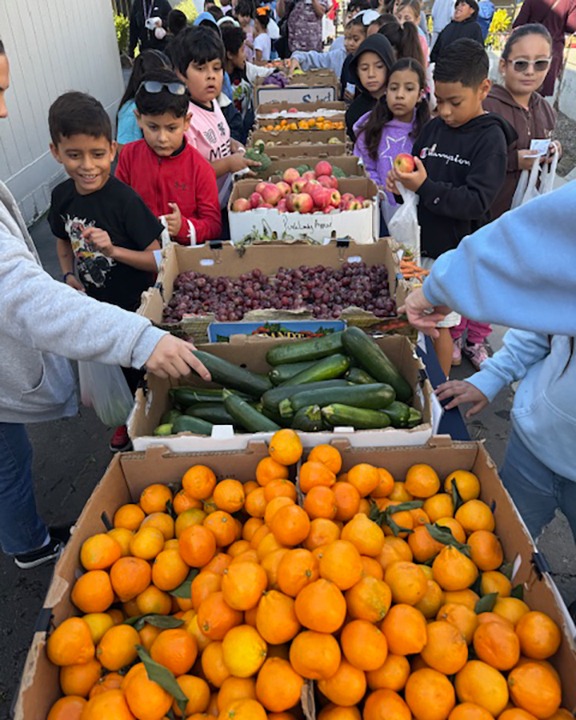
Nutrition education extends beyond the cafeteria. LMSV partners with Food 4 Thought, a farm hub based in Central California that distributes food grown by dozens of small, family farmers in the region. Food 4 Thought brings fresh, locally sourced produce to schools and holds farmers’ markets on campuses. These events help students learn how food is grown and harvested, and end up on their plates.
After a lesson about the food itself, students are provided with “food bucks” to select from a variety of foods brought in by Food 4 Thought. This helps expand students’ familiarity with and access to these foods; many children are able to taste foods for the first time and discover new favorites.
Separate Funding For Food
School nutrition programs operate independently from district budgets, explains Valdez. The USDA funds the National School Lunch (and Breakfast) program(s), while California is one of eight states in the US to provide additional funding for a Universal Meals program, ensuring that all students can have breakfast and lunch at no charge, regardless of family income.
“The program really breaks down the stigma associated with school lunches,” she explains. “They help improve attendance and focus in the classroom.” School meal times also provide important times for students to build friendships and exercise their agency during the day.
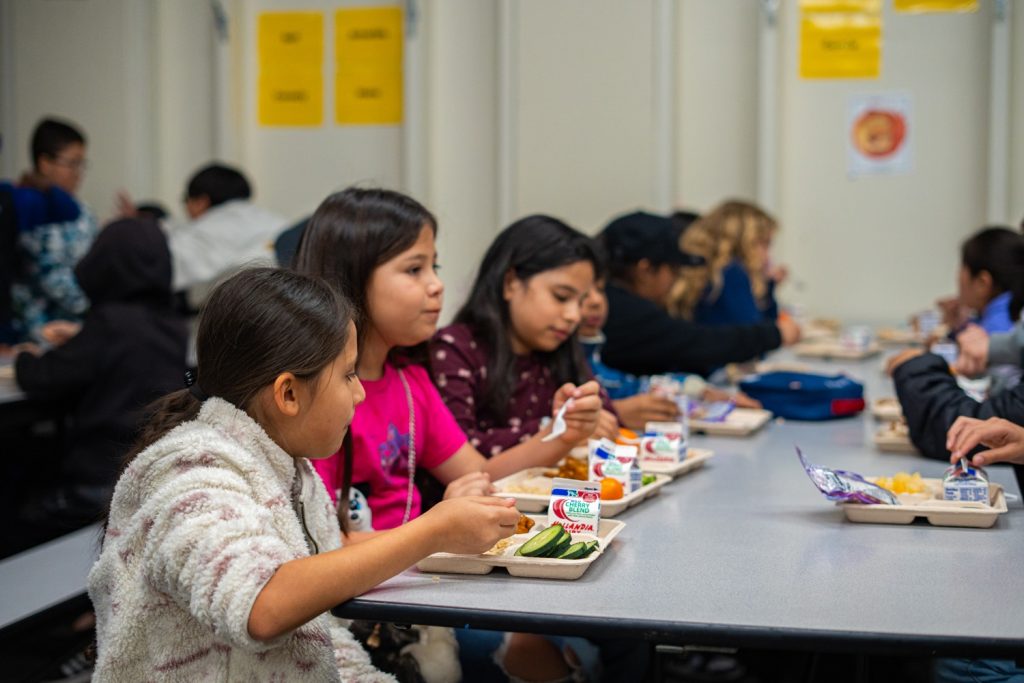
“School lunch is really the only place a student gets to make a choice themselves – by deciding what they put on their plate. And it brings a sense of joy when all their friends are eating together.”
Valdez’s team includes a registered dietitian, nutrition supervisor, chef, and many long-term staff members.
“The work that we do brings us joy,” she says. “I see my team having real, true connections with students that they’ve built over years. It’s so nice to see how happy the environment is.”
Valdez says her work feels deeply meaningful. “For me, it is a joy to see students get excited about something new. I never thought my career was going to matter this much, and every year I am surprised by the changes.
“There’s so much talk around school nutrition, and being part of this conversation and the health and welfare of the students’ future makes me feel good inside. I guess I’m just a passionate lunch lady at the end of the day!”
Learn more about our Child Nutrition Department and the dedicated staff serving our students each day. Listen to the episode and subscribe to the podcast!
LMSV Heart Podcast
(Apple)
(Spotify)
(Website)