The La Mesa–Spring Valley School District recently received a $50,000 grant from the San Diego Foundation through its Innovations in Education initiative. The Heart-Centered Connections Program grant will enable the district to provide comprehensive training for all Spring Valley Academy staff in a transformative leadership approach grounded in neuroscience, equity, and mindfulness.
The program emphasizes nervous system regulation for both educators and students, recognizing its critical role in well-being, learning, and school climate. It includes a series of workshops, guided practice sessions, and collaborative learning opportunities designed to embed Heart-Centered Connection (HCC) principles into daily school life. Through this work, staff will develop practices that strengthen nervous system resilience, reduce stress, and enhance emotional intelligence—ultimately improving communication, collaboration, and the overall educational environment.
See a CBS8 story about the training here.

Deepening Partnership with USD
According to Deann Ragsdale, Deputy Superintendent of Educational Services for La Mesa–Spring Valley Schools, the grant grew out of the district’s established partnership with the University of San Diego and Dr. Niki Elliott, Director of the Center for Embodied Equity and Neurodiversity at USD.
“Dr. Elliott began working with us last year at STEAM Academy through our Community Schools grant, delivering the same Heart-Centered Connections work that this new funding will now allow us to expand districtwide,” Ragsdale explained. “This year, she also connected the district with the San Diego Foundation, which made it possible to scale this work and reach more educators.”
The training focuses on equipping classrooms to better support neurodivergent learners, responding effectively to students who have experienced trauma, and deepening educators’ understanding of co-regulation and the neuroscience of the brain. Together, these strategies help create more inclusive, responsive, and emotionally supportive learning environments.
The Science of Emotional Regulation
“This training goes beyond mindfulness,” explains Ragsdale. “It helps educators understand the science behind how our brains regulate emotions—including the role of the vagus nerve—and how to attune to students’ needs by adapting and adjusting in real time.”
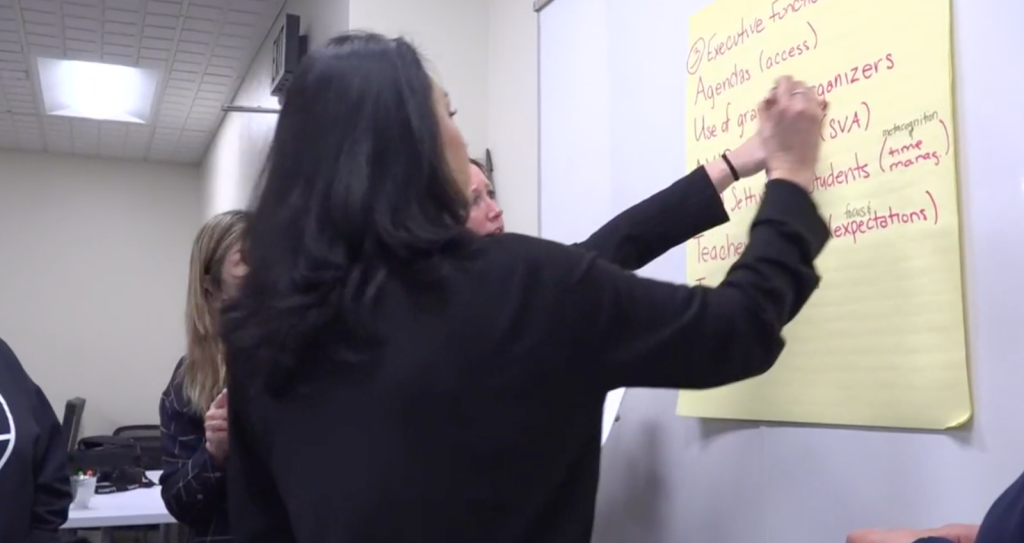
Through the training, teachers learn executive functioning strategies that support intentional pacing of instruction. “Sometimes classrooms need energizing strategies, and sometimes they need calming ones,” Ragsdale adds. “Every child presents differently, and there are physical exercises and activities that can help raise or lower energy levels to support learning.”
Effectively identifying and responding to student needs requires both awareness of what is happening beneath the surface and the skills to implement practices that foster a supportive learning environment. “As educators, when we learn to understand and unlock what students are experiencing, it allows us to better support them,” says Ragsdale. “The goal is to empower our staff. Adults set the tone, so we must support them in this work. That means helping educators regulate their own nervous systems first, so they can then use those strategies to support their students.”
Co-Regulation
Co-regulation is the practice of one person supporting another in managing emotions and behaviors. Through intentional modeling and the use of evidence-informed strategies, educators help students build the skills necessary for emotional regulation and self-awareness. This approach strengthens relationships rooted in trust and understanding, allowing students to feel supported, valued, and actively engaged in their learning and development.

“A teacher at STEAM shared with me, ‘We watch our kids and the trauma they’re walking through, and we’re told that we have to build relationships with them.’ That can feel one-sided, because it places the onus solely on the teacher,” explains Ragsdale. “Relationships are essential, of course, but co-regulation is about developing strategies that allow teachers and students to regulate together in the classroom.”
She continues, “Teachers first need to understand what they need to regulate their own nervous systems. From there, they can identify what a child needs to regulate theirs, which creates the conditions for a successful classroom. By intentionally designing the environment and adapting instruction to support both teachers and students, we can be far more effective in reaching our goals.”
Measuring Impact
The impact of the training is measured through staff surveys and student data, including Social Emotional Learning (SEL) surveys that ask students about their sense of connection, belonging, and overall well-being.
Ragsdale points to a notable decrease in suspensions and office referrals at STEAM Academy last year—outcomes she believes are due in part to the Heart Centered Connections (HCC) training. “You have to pair the inside work with the outside work,” she explains. “At STEAM, both happened last year—the staff focused on mindset through HCC training while also improving their systems and structures at the same time.”
Encouraged by these early results, the district is optimistic that Spring Valley Academy will now experience similar benefits and that the work can continue to scale to additional schools.
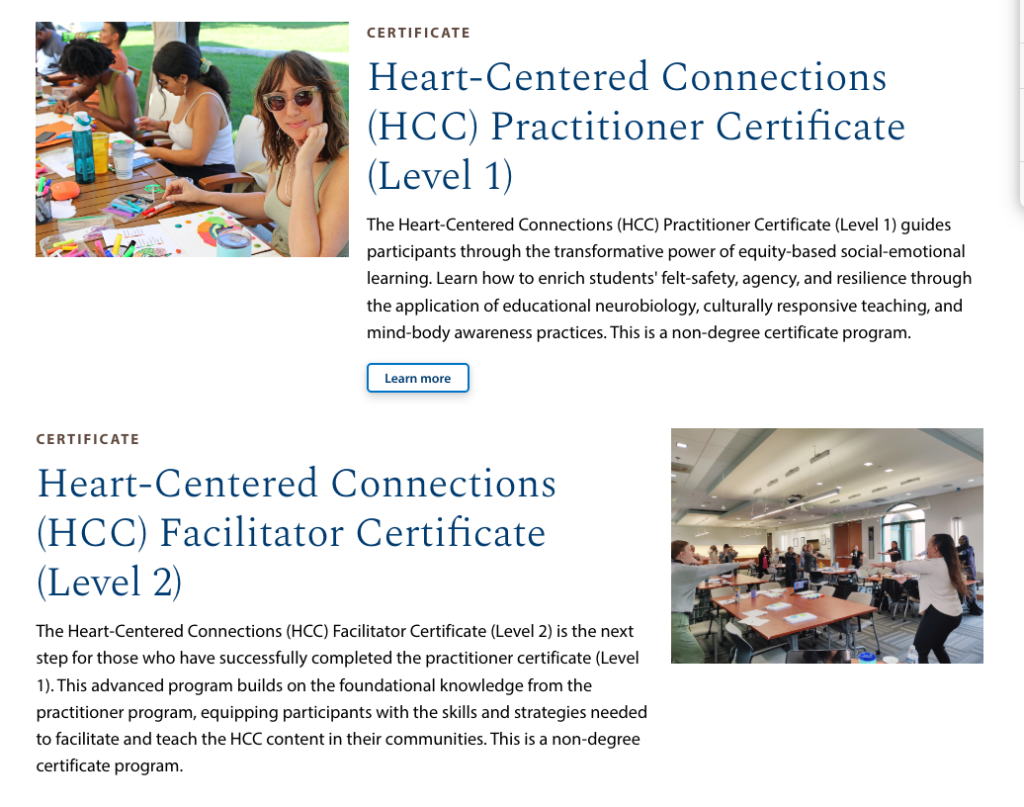
A key component of sustaining and expanding the initiative is developing internal capacity. To support this, two La Mesa–Spring Valley team members are helping lead the effort. Jennifer Coronel, Director of Student Supports, and Clara Izadi, Coordinator of Behavior Intervention and Support, completed Dr. Elliot’s “train-the-trainer” course—sponsored by the San Diego Foundation—prior to the award of this new grant.
This year, Coronel and Izadi will deliver the training at Spring Valley Academy using Dr. Elliot’s curriculum and materials. As Ragsdale emphasizes, “It’s not a program, and it’s not a curriculum—it’s a mindset. A way of learning and understanding that allows you to then build systems that truly support students and staff.”